Listing Acquisition for Real Estate Agents: Which Channel Wins Exclusive Listings?
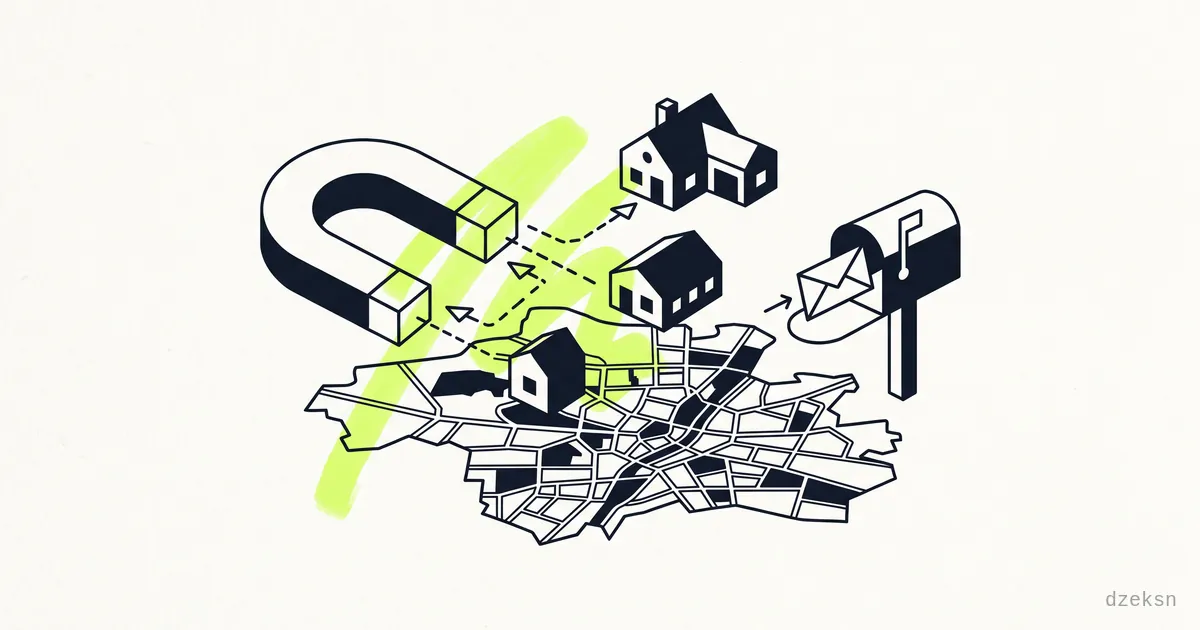
The bottleneck in the brokerage business is almost never the buyer — it's the listing. An agent who reaches sale-ready owners before they have committed controls their business; an agent who waits for listings to come in depends on luck. Listing acquisition is therefore not a side discipline — it is the core of the profession.
The short answer to the question of the best acquisition channel: there isn't one single winner. Referrals deliver the best closing rates but don't scale on demand. Farming builds up a territory over years. Cold outreach is tightly restricted by law. Bought seller leads are expensive and rarely exclusive. The underrated channel is your own online presence — the only one that works around the clock and catches owners at the very moment they start thinking about selling.
This article compares the channels honestly and then shows why the seller's decision process is the key to predictable acquisition.
The Acquisition Channels Compared
Referrals and Network: the Best Rate, the Worst Predictability
A referred contact arrives with trust already banked — the closing probability is correspondingly high. That's why systematic referral care belongs in every acquisition strategy: actively ask satisfied sellers for recommendations, keep in touch with notaries, tradespeople, property managers and banks.
The limit: referrals can be nurtured but not controlled. You never know when the next one will come. And even the referred owner googles you before calling — which means this channel, too, ultimately runs through your online presence.
Farming: Building Presence in a Territory
Farming means working one clearly defined territory for years — what German agents call a Farming-Gebiet: being present locally, distributing market reports for the neighborhood, informing the neighbors of sold properties, showing up at local events. The agent who counts as "the local agent around here" is the one who gets called when the time comes.
Farming works — but slowly and labor-intensively. And it has an open flank: between "I know that agent by sight" and "I'm hiring them" lies a research phase that happens online. Farming without a digital counterpart gives away part of its effect.
Cold Outreach: Tight Legal Limits
Reaching for the phone or directly approaching owners of privately listed for-sale-by-owner properties is tempting — but it is subject to tight legal restrictions, especially toward private individuals. When in doubt, get legal advice before actively approaching owners.
Note: This is not legal advice. Please clarify with a lawyer what is permissible in your specific situation.
Then there's the practical side: cold outreach reaches owners who are already selling on their own or don't want to sell at all — the timing is almost always wrong, the defensiveness high.
Bought Seller Leads: Expensive and Shared
Various providers and the big property portals sell the contact details of owners willing to sell. It sounds like a shortcut, but it has structural catches: the leads are expensive, frequently go to several agents at once, and you enter a price and speed race for the same owner. Above all, you build nothing — every month starts at zero, and the platform sets the terms. Acceptable as an add-on channel in growth phases; risky as a foundation.
Your Own Online Presence: the Channel That Works at Night
The last channel is the only one that reaches owners before they have left their contact details anywhere: your own website plus Google visibility. It answers the questions a seller googles anyway — in your name — and turns the researcher into a contact that belongs exclusively to you. Why that works becomes clear when you look at the decision process.
The Seller's Decision Process — and Where You Catch It
Hardly any owner wakes up and hires an agent that same day. In between lie, typically, three phases, each with its own searches:
- The latent phase. A trigger appears — inheritance, separation, job change, age. The owner googles general questions: how a house sale works, what the tax implications are, whether now is a good time. Whoever shows up here with helpful guide content gets filed away as the expert, long before competitors even know a property exists.
- The orientation phase. It gets concrete: the owner wants a number. They search for the value of their property, often with a town or neighborhood attached. This is the most valuable moment in all of acquisition — this is where it's decided whose name gets attached to the first assessment.
- The selection phase. The owner compares two or three agents: website, Google reviews, references from their area. Now your presence has to deliver — whoever looks thin here is dropped from the shortlist without ever knowing about it.
The classic channels almost all start at phase three, when the competition is already bidding. Your own online presence is the only channel that serves all three phases: guide content for the latent phase, a valuation path for the orientation phase, references and reviews for the selection phase.
For the orientation phase, one instrument has proven itself: the valuation funnel, which turns the question about a property's value into a qualified inquiry. How such a website is built as a lead machine in detail is described in Building a real estate agent website — no need to repeat it here.
For any of this to be found, you need local visibility: owners search with a location attached, and Google preferentially shows them nearby providers. The fundamentals — Business Profile, local pages, reviews — are covered in Local SEO: getting found on Google; what all this means specifically for the brokerage business is spelled out in SEO for real estate agents.
An Acquisition System Instead of One-Off Measures
The channels don't compete — they reinforce each other: farming makes you known in the territory, the website catches the research, reviews decide the selection, referrals top up the pipeline. The difference between agents with full and empty listing books rarely lies in a secret channel — it lies in whether the channels play together as a system or burn out side by side as isolated efforts.
If you want to see guided inquiry paths that lead prospects step by step to making contact, you'll find several real examples in the Showroom.
Frequently Asked Questions
Which acquisition channel should beginners start with?
Start with what you control: a clearly defined farm territory and an online presence that answers the seller questions of that territory. Referrals require an existing client base first, and bought leads burn a lot of money without a foundation of trust. Territory plus visibility is the combination that compounds from day one.
Are bought seller leads fundamentally bad?
No — as a bridge or add-on channel they can work, if you respond very fast and honestly weigh the costs against actual closed deals. It becomes a problem when they are the foundation: then the platform's prices and rules run your business, and no value of your own is built.
How long until my own website brings in listings?
Think in months, not weeks — organic visibility has to grow, especially if the website is new. In return, it then works permanently: a well-ranking guide or area page brings inquiries for years, with no ongoing cost per contact. If you need results faster, combine the website with other channels in the meantime.
What is allowed when directly approaching private owners?
Actively approaching private individuals for advertising purposes is subject to tight legal restrictions in Germany. Get legal advice before any form of direct outreach — this article does not replace that advice. Practically speaking, there is much to be said anyway for putting your energy into channels where the owner comes to you.