Why Am I Not Getting Any Inquiries Through My Website?
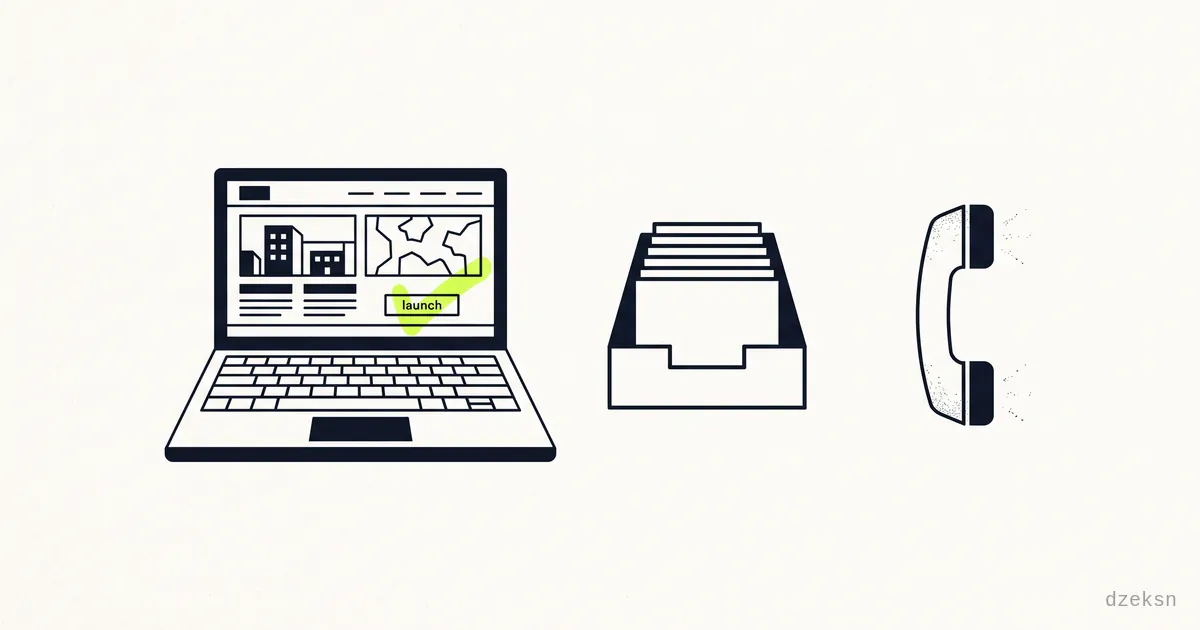
The short answer: in almost every case it comes down to one of two problems. Either nobody finds you — so no visitor ever arrives who could send an inquiry. Or visitors do arrive but find no reason, or no way, to contact you — so they leave again. Both feel exactly the same ("the website isn't doing anything"), but they have completely different causes and completely different fixes.
So before you pour more money into advertising, settle the decisive question first: do I have too few visitors — or am I losing the visitors I have? If you don't separate the two, you will often end up repairing the wrong thing.
The 30-Second Self-Test
Take a look at your website analytics tool. If you don't have one, that in itself is part of the problem — without numbers, you are operating in the dark.
- Fewer than a handful of visitors per day? Then you have a visibility problem. You are not being found.
- A decent number of visitors, but nobody calls or writes? Then you have a conversion problem. The site fails to convince, or makes getting in touch too hard.
The three most common causes cover both cases: load time, a missing call to action, and local invisibility. Let's go through them in order.
Cause 1: The Site Loads Too Slowly
The vast majority of local searches happen on mobile these days — someone is facing a problem, pulls out their phone and searches on the go, often on a mobile connection rather than Wi-Fi. If your site then takes three or four seconds to load, the prospect is gone before your offer even appears. They simply tap the next result.
Typical brakes: huge, uncompressed images; a bloated site-builder theme loading dozens of scripts; or embedded external elements that block the page. The treacherous part: on your own computer, where the site sits in the cache, everything feels snappy. A new visitor on a phone experiences something entirely different.
Test it honestly: open your site on a smartphone over the mobile network, with a cleared browsing history. Count along. Anything over two to three seconds is costing you inquiries — measurably.
Cause 2: There Is No Clear Call to Action
This is the number-one silent inquiry killer. Many websites describe at length what the business does — and then leave the visitor stranded. No prominent button, no visible phone number, no simple form. The prospect would have to work out on their own how to reach you. Most won't bother.
A website that generates inquiries takes the visitor by the hand:
- A visible way to contact you on the very first screen — phone number and a "Get a quote" button, reachable without scrolling.
- On mobile, the number as tap-to-call — one tap and the phone dials. No copying digits.
- One single, clear call to action per section. Three equally weighted buttons side by side paralyse; one that clearly stands out leads.
- A short form instead of a questionnaire. Every additional required field costs you completions. Name, request, preferred way to reach them — a first inquiry rarely needs more.
Ask yourself on every page: would a stranger know within five seconds what to do next? If not, you are losing them.
Cause 3: You Are Locally Invisible
If the self-test shows barely any visitors, the finest call to action won't help — nobody arrives to see it. What's missing is local findability.
Two things matter most here. First, your site must make machine-readable sense of who you are, what you offer and which area you serve — otherwise neither classic search engines nor AI assistants will recommend you. How that works technically is covered in detail in getting found in AI search. Second, a service area needs its own unique pages per town and service — a single "we serve the whole region" page is not enough to show up for the many location-specific searches. The clean way to build this is explained in location pages without duplicate content.
The Munich Factor: Why Conversion Bites Harder Here
In a village you might be the only provider in your field — people forgive a clunky website there. Munich is the opposite: densely populated, with a dozen or more businesses for almost every service. The searcher compares within seconds and decides on first impressions. Here, a slow site or a hidden contact path doesn't mean "the customer will wait" — they are already with the next provider, who is one click away.
On top of that comes the commuter-belt dynamic. Many inquiries come not from the city core but from the surrounding towns — Dachau, Fürstenfeldbruck, Freising, Erding. Search queries frequently combine place and service ("… in Dachau", "… Munich and surrounding area"). If you don't map out your service area properly, you are simply invisible to a large share of ready-to-buy demand — even though you would happily take those jobs.
And the most expensive mistake, saved for last: in a competitive market like Munich, paid clicks are pricey. If you steer ad budget at a site that doesn't convert, you are paying for visitors who bounce straight off. In most cases, the better website is the cheaper investment — see Google advertising vs. a better website.
The Proof: A Reworked Site Brings Real Inquiries
This is not theory. For a commercial cleaning company serving Munich, Dachau and the surrounding area, we implemented exactly these building blocks: dedicated subpages per town and service, a clean machine-readable structure, clear contact paths. The result showed within a short time — the site appeared with enhanced listings (rich results) in Google search and brought in genuine customer inquiries. No ad budget; just a website that gets found and leads the visitor to an inquiry.
We deliberately quote no invented figures and make no "test winner" claims. What is verifiable: the combination of local findability and a site that leads to contact works — even in the dense Munich market. You can see finished examples in the showroom.
Your Diagnostic Checklist
- Check your analytics: too few visitors (visibility) or plenty of visitors with no inquiries (conversion)?
- Measure mobile load time — on a phone over the mobile network, with a cleared history. Over two to three seconds is too slow.
- First screen: is a contact option visible without scrolling?
- Phone number tappable on mobile (tap-to-call)?
- One clear call to action per section — no button chaos?
- Contact form kept short — only the truly necessary fields?
- Local references visible: are your districts and surrounding towns named specifically?
- Machine-readable: can a search engine or AI application unambiguously extract your key facts?
The more of these you answer with "no", the clearer it becomes why the inquiries aren't coming — and the bigger the lever a rework offers.
The Next Step
If your site fails several of these points, that is not bad news — it means the cause is known and fixable. Whether a targeted rework is enough or a full rebuild makes more sense depends on the state of the site; a way to judge that is laid out in having a website redone: costs.
The fastest way to grasp the difference is through finished examples: in the showroom you'll find websites for local businesses built precisely for findability and inquiries. Have a look around — and if your Munich website is finally supposed to deliver inquiries, the first step is an honest diagnosis of the three causes.
Frequently Asked Questions
I have visitors, but nobody gets in touch — why?
That is a conversion problem, not a visibility problem. Usually a clear call to action is missing: no visible contact option on the first screen, no tappable phone number, or a form that is too long. A lack of trust signals (no genuine references, no professional appearance) also makes visitors bounce. Make the path to an inquiry as short and unambiguous as possible.
Should I just run Google ads to get inquiries?
Only if your site converts. Ads bring visitors — if the site doesn't convert, you pay for bounces. Clicks are expensive in Munich in particular. Fix the website first; only then does advertising pay off at all. More in Google advertising vs. a better website.
How fast does my website need to load?
As a rule of thumb: under two to three seconds, measured on a phone over the mobile network with a cleared history — not on your own computer, where everything sits in the cache. The most common brakes are large, uncompressed images and bloated site-builder themes loading many scripts.
Why can I find my own site on Google, but customers can't?
Because you search for your company name — Google always finds that. Customers search for the service and the place ("… in Dachau"). For that you need dedicated, unique pages per town and service, plus a machine-readable structure. Details in location pages without duplicate content.
Is a rework enough, or do I need a completely new website?
It depends on the state of the site. If the basic structure is solid, load time, calls to action and local references can often be sharpened up. If the site is technically outdated or unreadable for machines, a rebuild usually pays off — one where findability and conversion are designed in from the start. A cost overview is in having a website redone: costs.