Google Maps in Munich: why the 3-pack works differently here than in the rest of Bavaria
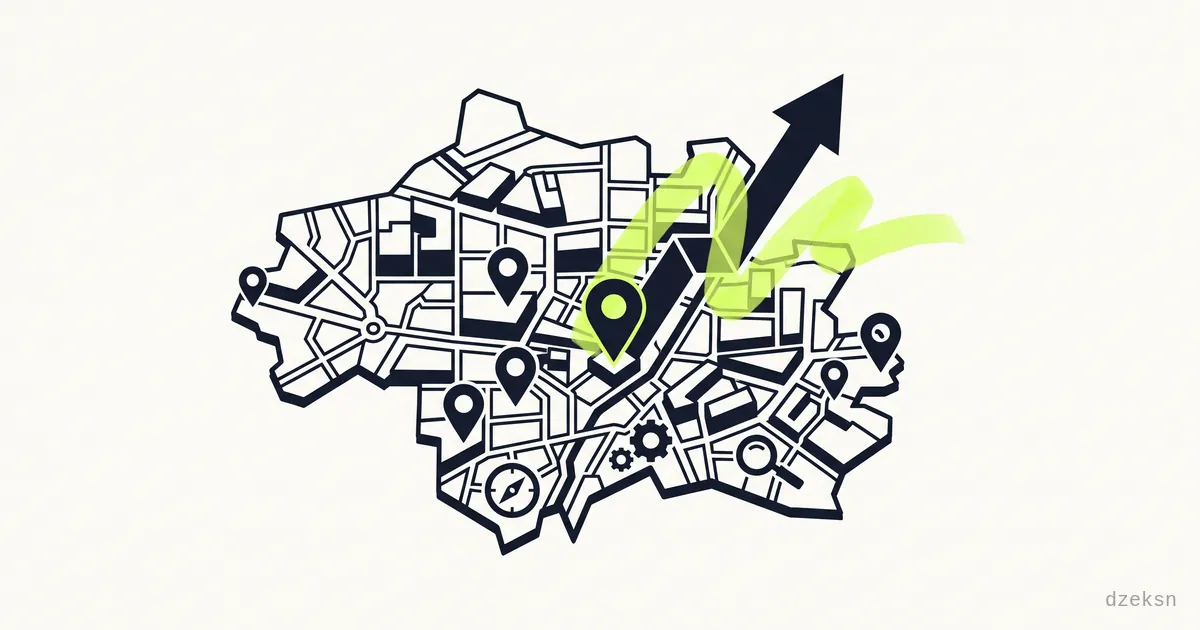
The shortest honest answer first: in Munich, there is no such thing as the one Google Maps ranking you could conquer. The map panel with the three highlighted businesses — the so-called 3-pack — is recalculated for every searcher, depending on where they are standing at that moment. Someone searching for "commercial cleaning" in Sendling sees three different results than someone in Bogenhausen. Your ranking is not a fixed position; it is a moving target.
That is why, in a city of over a million people, obsessing over the keyword "service + Munich" gets you very little. What you can genuinely improve are the levers Google evaluates independently of the searcher's location: your Business Profile, your reviews, and the website behind them. That is exactly what this article works through.
Proximity: why the 3-pack behaves completely differently in a village of 5,000
Google ranks local results on three factors: relevance (does the business match the search?), distance (how close is it to the searcher?), and prominence (how established does it appear online?). In a small Bavarian municipality, distance barely matters — the whole town sits within a radius of a few kilometres. Anyone with a decent profile there shows up in the 3-pack practically everywhere in town.
Munich works fundamentally differently. The city stretches across roughly 310 square kilometres, plus a densely populated surrounding region. That turns the distance factor into the dominant filter: Google prefers businesses whose address is close to the searcher. If the user moves just a few districts over, the map pack flips completely. A cleaning company in Pasing can sit permanently in the 3-pack in the west of the city and be completely invisible in the east — for the same search query, at the same time.
This is the Munich reality that many guides gloss over: you cannot move your location. The radius in which your pin wins is fixed by your address. Everything else is decided by the two factors you can actually influence.
The city-name keyword fallacy
Many businesses measure their success by a single question: "Do I show up in the 3-pack for 'commercial cleaning Munich'?" That question is misleading, because it is a snapshot from one location — presumably your own desk or the city centre. A customer in Trudering sees something completely different there.
If you have a city-centre address, you win the distance factor for the central districts almost automatically. If you are based in the surrounding region or on the edge of the city — which is where the majority of trade and service businesses sit — you lose that battle purely through geography. Grinding away at it costs nerves and budget without moving anything.
The better strategy: accept the proximity factor where it works against you, and shift your effort to relevance and prominence — plus a website that covers the districts your pin will never reach.
What you can still move without a city-centre address
Fill in your category and profile down to the last detail
The primary category is the single biggest relevance lever. "Commercial cleaning" clearly beats a vague category like "cleaning service". Add fitting secondary categories, maintain an honest list of services, concrete opening hours, and real photos. Make sure your name, address, and phone number are written identically everywhere on the web — inconsistencies weaken the prominence Google attributes to you.
Collect reviews with substance
Reviews feed the prominence factor, which in Munich works across district boundaries. What matters is not just the stars but the text: when customers mention the district and the specific service in their reviews, that delivers additional relevance signals. Actively ask satisfied customers for an honest review — but never buy or invent any. Fake reviews get exposed and can cost you the profile.
Set up your service area correctly
If you work at the customer's premises rather than the other way round, you belong to the businesses that can run their profile as a service-area business instead of a storefront. That does not replace the distance factor, but it prevents an unsuitable address from holding you back. How to set this up cleanly is covered in detail in the article on the Business Profile without a business address.
Treat your website as an amplifier
This is where most businesses leave reach on the table. The map pack is only one part of the Google results page. Below and beside it sit the organic results — and those are not strictly tied to the searcher's location. This is the route through which you reach the districts your pin never gets into.
That requires real content: your own, substantially distinct location pages for the districts and surrounding towns you serve, plus structured data and an embedded map. These website signals also strengthen the relevance of your profile. How a business from the surrounding region uses this to deliberately attract Munich customers is covered in getting found on Google in another city.
A real-world example: from the outskirts into the city
A concrete case from our own work is a commercial cleaning company based in the Munich and Dachau area. Its address is not in one of the central districts — in a pure proximity contest for the city centre, the business would barely stand a chance. Through the combination of a meticulously maintained profile and a website that presents each town and each service individually, it still reaches customers from the city and the surrounding region. The business appears in Google's enhanced results (rich results) and receives genuine enquiries through them. We do not need invented numbers for this — the mechanism is the point: what the pin cannot do, the website makes up for.
If, conversely, you want to know why three specific businesses come out on top for your search, the guide to systematically analysing Munich's top 3 will help.
Conclusion and next step
You do not improve your Maps ranking in Munich by chasing a city-name keyword that looks different for every searcher. You improve it by accepting the distance factor where it runs against you, and by working on relevance, prominence, and your website — the levers that work across district boundaries.
If you are practically invisible in your own 3-pack, that is rarely down to chance and almost never down to the missing city-centre address alone. What is usually missing is the website layer that closes the proximity gap. Our portfolio at showroom.dzeksn.com gives you an impression of what such local SEO projects look like — and from there it is easy to request an analysis of your current visibility.
Frequently Asked Questions
Why do I see myself in the 3-pack, but my customers don't?
Because you usually search from your own location or office — and there, you win the distance factor. Customers in other districts get a different map pack. Always assess your visibility from the perspective of the districts where your customers live, not from your own.
Can I conquer the Maps ranking for the whole of Munich?
No, there is no city-wide fixed ranking in the map pack. In a city this size, the 3-pack is calculated by proximity to the searcher and changes from district to district. Realistically, you win the areas around your own address — the rest you capture through organic search and your website.
Would a second address in the city centre bring more reach?
Only if a real, staffed office operates there. A pure letterbox address violates Google's guidelines and can cost you the profile. The trade-off between a genuine second location and the risk is covered in the article on the Business Profile with multiple locations.
How important are reviews for the Munich Maps ranking?
They feed the prominence factor, which — unlike distance — works city-wide, making them especially valuable for businesses outside the centre. What counts are genuine reviews with meaningful text; bought or invented reviews do more harm than good.
Is the Google profile enough, or do I also need a website?
For the districts directly around your address, the profile can be enough. To reach the districts where your pin loses the proximity contest, you need the organic layer — and that comes from a website with unique location and service pages.