"Car repair shop near me": why you don't show up — and what actually helps
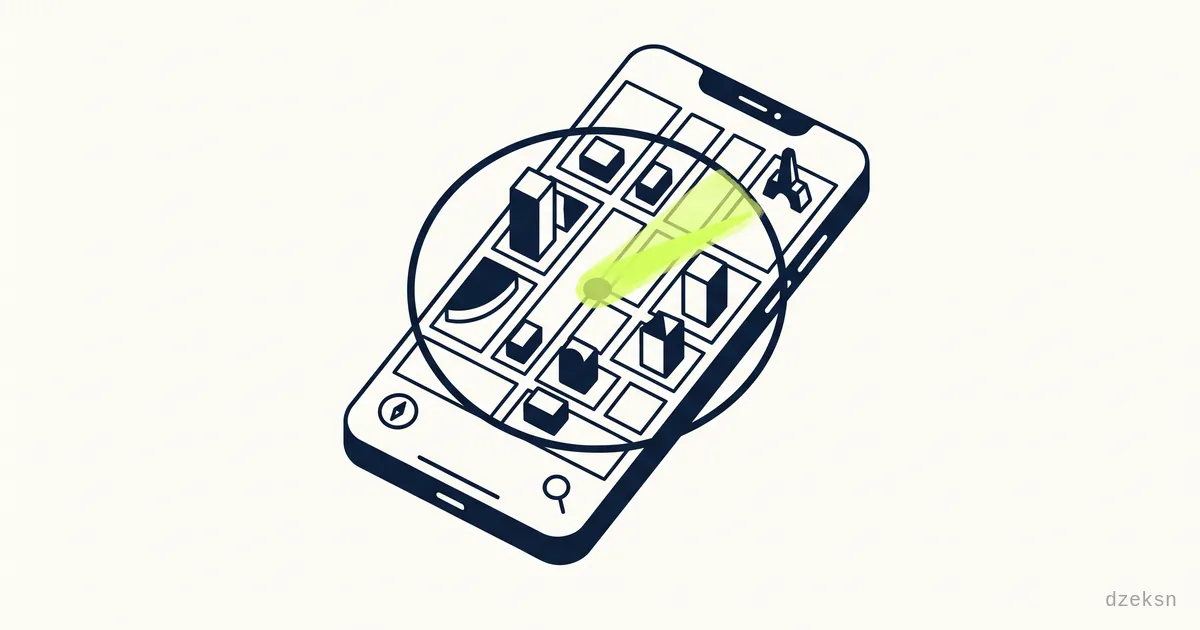
Someone is stranded at the roadside with engine trouble, pulls out their phone and types "car repair shop near me". Your workshop is two streets away — and yet three other businesses appear. Why?
The short answer: "near me" is not a search term you can optimise for. Google strips those words out and replaces them with the searcher's actual location. "Car repair shop near me" becomes, internally, "car repair shop + right here, where this phone is". The result is then decided by three signals: proximity (how far your business is from the searcher), relevance (whether your category and content match the query), and prominence (how visible and established your business is online). If you are not showing up, at least one of these three signals is too weak.
That is also the good news: you can act on two of those three levers immediately. Only the distance itself cannot be changed — but its weight can.
Why "near me" is not a keyword you can buy
Many businesses try to squeeze the words "near me" or "nearby" into headings and copy. It achieves nothing. Google resolves near-me searches not through wording but through the device's location data. That is why two people typing "car repair shop near me" at the same moment see different results — depending on where they are standing.
This has an important consequence: there is no fixed position for you to "conquer". Your visibility is a radius around your location that grows wider or narrower depending on how strong your relevance and prominence signals are. A weak business only gets found when the searcher is practically standing at its front door. A strong business still shows up even when a competitor is closer.
What Google actually evaluates in near-me searches
1. The category in your Business Profile
The most common silent mistake: a primary category in the Google Business Profile that is too broad or simply wrong. If it says "auto repair shop" while the customer is looking for a "certified master mechanic workshop", a "tire shop" or an "auto air conditioning service", you lose to the business that has set exactly that category. The category is the strongest relevance lever — and it can be corrected in half an hour without spending a cent.
2. Your review profile — volume, recency, replies
Google measures prominence partly through reviews. And it is not just the star rating that counts, but the whole profile: How many reviews do you have compared to the top-ranked businesses? Do new ones come in regularly, or is the latest one a year old? Do you reply to criticism? A steady flow of fresh reviews weighs more than an old pile.
3. The website behind the pin
The Business Profile does not stand alone — Google cross-checks it against your website. Do the name, address, and phone number match exactly? Are there dedicated pages for the services people search for? Does the site cover the towns where your customers live? A thin one-page website gives Google hardly any evidence of relevance. A website with proper service and location pages delivers exactly the signals that widen your visibility radius. This is precisely where most small businesses lose — and precisely where there is the most to gain.
Why this is especially tricky in Munich
Munich turns near-me searches into a special case for several reasons — not as a platitude, but mechanically:
- The radius in the centre is tiny. In densely built districts like Maxvorstadt or Haidhausen, dozens of similar businesses sit within a stone's throw of each other. The proximity advantage shrinks to a few hundred metres — here, relevance and prominence decide almost everything. In the surrounding region, by contrast, the radius is wide, because the nearest alternative can be kilometres away.
- Newcomers generate near-me searches. Munich grows strongly through new arrivals who do not yet know the district names. Someone who has just moved here does not search for "car repair shop Sendling" — they search for "car repair shop near me". These searchers are your walk-in customers of tomorrow — and they only find you through location signals, not district names.
- Commuter flows shift the location. The same person searches near their workplace in the city centre at lunchtime and near their home on the outskirts in the evening. Your business can rank at the top in one of those sub-markets and be invisible in the other.
- Trade fairs, tourism, people passing through. A high share of out-of-town searchers know no local names at all and rely entirely on near-me searches. For businesses near the main station, the trade fair grounds, or the motorway, this is a distinct, constantly changing stream of customers.
In short: Munich splinters into many small sub-markets that shift by time of day and by searcher. A single map pin never covers all of that — the website has to close the gaps.
Diagnosis: where it's going wrong for you
Work through these points honestly. It usually comes down to one or two of them:
- Unrealistic proximity expectations. You are based on the edge of the city or in the surrounding region and want to be found in the centre. No trick beats raw distance — but strong relevance and prominence signals plus dedicated location pages for your target towns shift the radius noticeably.
- Too broad a category. Your primary category is a generic umbrella term, not an exact match.
- A weak review profile. Few or old reviews, no replies.
- Contradictory details. Your name, address, or phone number differ between your profile, your website, and business directories.
- A thin website. No dedicated service pages, no local references, slow loading on mobile — even though near-me searches happen almost exclusively on phones.
If you want to go beyond your own weaknesses and take apart the businesses ranking above you, the step-by-step analysis in Why do competitors rank above me on Google? will help.
What actually helps
Sharpen the category. Choose the most specific primary category that matches your core business, and add fitting secondary categories. This is the fastest single jump.
Keep reviews flowing. Ask satisfied customers actively and regularly for a review — and reply to every one, good or bad.
Turn your website into evidence. Every service gets its own page with real content. The towns in your catchment area get their own location pages — not one copied boilerplate text, but substantially unique pages, otherwise Google penalises you. This is exactly where most DIY attempts and plenty of agencies fail; how to do it properly is shown in 75 location pages without duplicate content.
Here is what that looks like in practice: our showroom includes a demo website for an independent car repair shop with dedicated service pages and eight individual location pages for the towns around the business — exactly the structure that widens the visibility radius. And that this structure is not just theory is proven by a real client project: a Munich cleaning company whose website earned enhanced Google results and genuine enquiries within a short time. For businesses with a large catchment area, we have built a website with more than 75 unique location pages for Munich and its surroundings.
If your business is based in the surrounding region but your customers should come from the city, it is also worth reading getting found on Google in another city. And if you have no storefront at all but travel to your customers, you need a service-area profile instead of an address.
The honest next step
Whether your problem lies with the category, the reviews, or the website is usually visible within a few minutes of looking at your online presence. Take a look at the showroom to see how such websites are built — from the workshop demo to real client projects with a full local SEO build-out. If you would like an honest assessment of where your near-me visibility is stuck, get in touch through it. No sales pitch with promised numbers — just a concrete list of what is missing.
Frequently Asked Questions
Why don't I show up for "near me", even though my business is right next door?
Because proximity is only one of three signals. If your category is too broad, or your review profile and website are weaker than your neighbour's, Google can rank the other business as the better answer despite the greater distance. In dense areas, proximity alone is not enough.
Does it help to put "near me" in my titles and copy?
No. Google strips those words out and uses the searcher's location instead. Optimise for your actual services plus town names — those are the terms Google genuinely evaluates.
Can a business on the edge of the city appear in near-me searches in central Munich?
Right at the searcher's location in the centre, distance works against you. Strong relevance and prominence signals plus dedicated location pages for your target districts can widen the radius — but a city-centre placement in a pure near-me search is never guaranteed.
Why do two customers see different results for the same search?
Because every near-me search is based on the device's current location. Munich thereby splinters into many small sub-markets that even shift with the time of day — near the workplace at lunchtime, near home in the evening.
Is a well-maintained Google profile enough, or do I absolutely need a website?
The profile is the baseline, the website is what decides the radius. Google cross-checks profile and website: only dedicated service and location pages deliver the relevance evidence that keeps you visible even when a competitor is closer.