What Does a Website Really Cost for a Small Business?
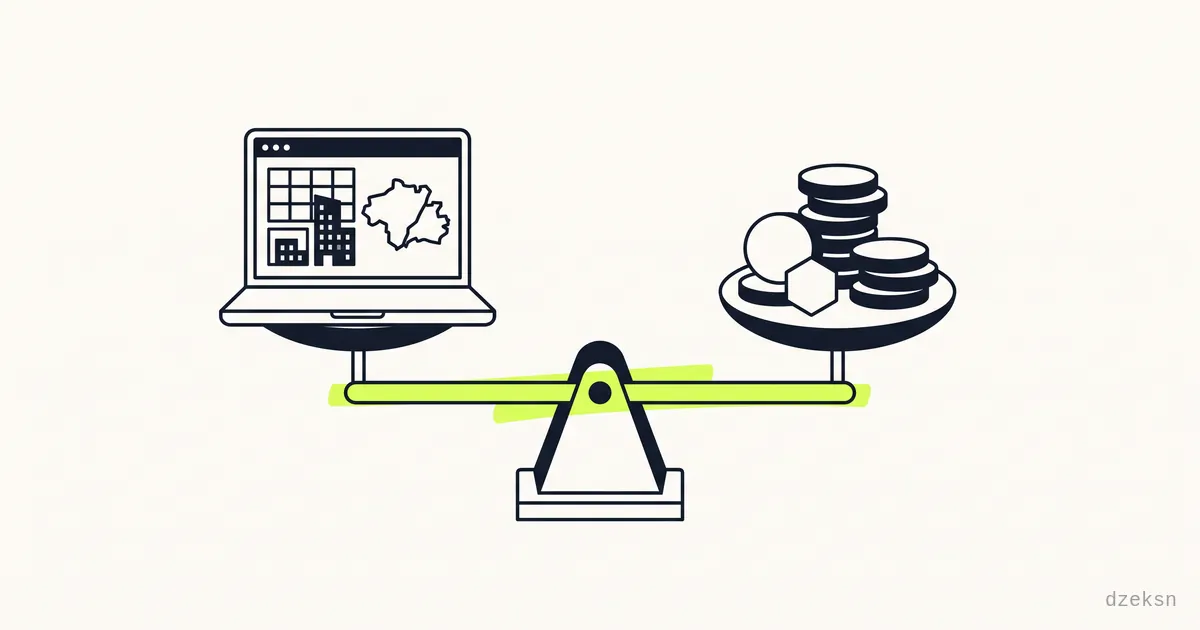
The short version: a decent website for a small business costs very different amounts depending on the route you take — roughly from a low three-figure amount per year with a DIY website builder, to a one-off low-to-mid four-figure sum with a freelancer, up to a high four-figure or five-figure project with an agency. The range is this wide because "website" can mean anything — from a digital business card to a sales machine that brings you new enquiries every day.
If you're a tradesperson, restaurant owner or service provider searching for prices, you usually want just one answer: is this worth it for me, and what do I get for my money? This article gives you honest price ranges, names the hidden costs, and shows you how to tell a good offer from an expensive placeholder.
The Three Routes and Their Honest Price Ranges
Route 1: DIY website builder
You build the site yourself with one of the well-known commercial website builders. The direct cost is a low-to-mid double-digit euro amount per month — so a low three-figure amount per year, including domain and hosting.
The honest catch: you pay with your time. Setting up a proper site yourself easily eats 20 to 40 working hours — writing copy, sorting photos, fiddling with layouts. And the result often looks like a template, because thousands of other businesses use the same blocks. For a simple online presence, that's fine. For a site that ranks well on Google and brings in enquiries, it usually isn't.
Route 2: Freelancer
A single web designer or a small two-person shop builds you a custom site. The going market rate here is a one-off low-to-mid four-figure sum for a small business website — depending on the number of pages and the effort that goes into copywriting and search engine optimisation.
For most small businesses, this is the sweet spot: custom design, real content instead of placeholders, and one person who actually understands what your business does. Pay attention to what's included in the price — more on that below.
Route 3: Agency
An agency brings a whole team: strategy, design, development, often ongoing marketing too. In return, prices realistically sit in the high four-figure range and reach five figures for larger projects.
For a trades business or a restaurant, that's often overkill — you're paying for overhead you don't need. It starts to make sense when you're running multiple locations, an online shop or ongoing campaigns.
Hidden Costs — the Checklist
The quoted price is rarely the final price. These items tend to get forgotten:
- Ongoing subscription fees: website builders charge month after month. Cancel, and the site is usually gone — you're renting, you own nothing.
- Plugins and add-ons: appointment booking, forms, galleries — on many platforms, every extra feature costs extra, often as another subscription.
- Maintenance and updates: software ages. Without upkeep, a site becomes slow, insecure or breaks. Ask what maintenance costs — or whether the setup needs maintenance at all.
- "SEO packages": a classic. Monthly fees for vague services with no measurable result. Serious search engine optimisation is built into the site itself — clean technology and real content — not sold as a never-ending subscription.
- Copy and photos: many offers assume you'll supply the content. If you don't, placeholders go in — or a surcharge for copywriting.
- Domain and email: small, but recurring. It should be clearly named in the offer.
Do the maths over three years. A cheap website builder with lots of add-on subscriptions can end up more expensive than a site you pay for once and that needs little upkeep.
How to Recognise Quality
A price says nothing about quality. These five points do — use them as a checklist against every offer:
- Loading speed. A good site loads in one to two seconds, including on mobile. Slow sites lose visitors and rank worse. Ask for the PageSpeed score, or test it yourself with Google's free tool.
- Local SEO. Crucial for location-based businesses: will your business be found when someone searches "[your service] in [your town]"? A good site is built precisely for those local searches.
- Dedicated location pages. If you serve several towns, each one needs its own page with genuinely unique content — not the same template with the town name swapped out. Google detects and penalises copied content.
- Real content instead of placeholders. Does the finished site still contain dummy text or generic waffle? Then it won't rank. Substantial copy tailored to your business is half the battle.
- GDPR compliance. Fonts and assets served locally instead of from third-party servers, a proper Impressum (the site notice German law requires on every business website) and a correct privacy policy. Mistakes here can get expensive.
If a provider has no clear answers on these points, the low price isn't a bargain — it's a warning sign.
Proof That It Pays Off
Theory is one thing. Here are two projects that show what a properly built site delivers:
Reinigung Rada (commercial cleaning, Munich and surroundings) got a site with service-by-location subpages and reached Google Rich Results — the enhanced search listings — within a very short time, along with real customer enquiries through the site. That's the difference between "being online" and "being found": reinigung-rada.de.
The Entrümpelung Rahimic project shows how far local visibility can carry: over 75 unique location pages for Munich and the surrounding area, plus dedicated service subpages and full local SEO. Every location page is substantially unique — exactly what Google demands for good rankings.
The point isn't the price, but the maths behind it: a single won enquiry — one moving job, one cleaning contract, one new regular customer — can pay for the entire website. From then on, the site works for you.
Conclusion
A website isn't an expense, it's an investment — provided it's built for visibility and not just for good looks. The cheapest route is rarely the least expensive once you factor in running subscriptions, add-on costs and the enquiries you never receive. And the most expensive route is unnecessary for most small businesses.
For a typical trades, hospitality or service business, a custom-built, low-maintenance site with real local SEO is almost always the best choice. Want to see what that looks like before you sign a contract anywhere? The showroom lets you click through finished websites and projects — and offers a direct way to request a project of your own. A firm quote is always individual, because the price depends on the number of pages, locations and content.
Frequently Asked Questions
What does a website cost for a trades business?
For a trades business with a custom site, its own copy and local SEO, a one-off low-to-mid four-figure sum is the realistic market rate when a freelancer builds it. A DIY website builder is cheaper on paper, but costs a lot of your own time and rarely produces good rankings. The exact price depends on scope — above all on the number of service and location pages.
Website builder or web designer — which is better?
A website builder makes sense if you only need a simple digital business card and are willing to invest your own time. A web designer makes sense as soon as the site is supposed to generate enquiries: custom design, real content and technology that ranks on Google. For location-based businesses facing competition, the web designer is usually the more economical choice.
Why are some website offers so much cheaper?
Cheap offers usually cut exactly what makes a site successful: custom copy (placeholders instead), proper local SEO, fast loading times and unique location pages. On top, there are often running subscription costs or surcharges for extra features. Always calculate over three years and check what's actually included.
Are there ongoing costs?
Yes, to some extent always. Domain and hosting are recurring, as is possible maintenance. Be wary of monthly website-builder subscriptions and "SEO packages" with no measurable result — those add up over the years. A site paid for once and built to need little upkeep can be cheaper in the long run.
When is a professional website worth it?
As soon as enquiries or customers can come in through the site. A single won enquiry often covers a large part of the cost. What matters is that the site actually gets found in local searches — otherwise it's just an online brochure nobody reads.