Free Website Hosting: Does It Work Seriously for a Business?
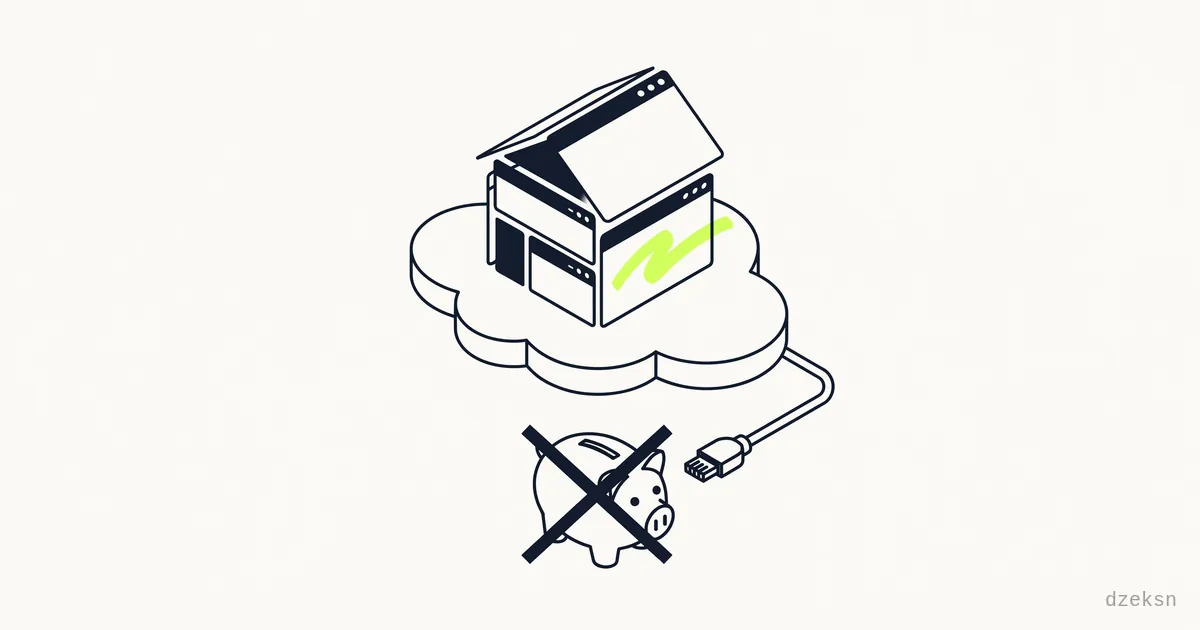
Yes — a professional business website can be hosted completely free of charge, without ad banners, without a third-party logo in the footer, with your own domain and automatic HTTPS. The precondition: the website must be static, meaning it consists of finished HTML, CSS and JavaScript files. Then a service like GitHub Pages takes over delivery permanently for free. The only running expense is the domain, typically 10 to 20 euros per year.
This is neither theory nor a hobbyist hack. Three of our client projects run exactly this way in everyday use: maschinen-niedermeier.com (car and agricultural machinery repair shop in Scheyern, Bavaria), benjiholiday.com (Munich musician and DJ) and charas-lounge.com (music project from Munich). All three: own domain, HTTPS, complete SEO, zero hosting costs.
This article explains what "static" means, who the model is sufficient for, where its limits lie — and roughly what the path there looks like.
What does "static website" mean — and why is that no disadvantage?
A static website consists of finished files that the server delivers to the browser unchanged. The counterpart is the dynamic website: there, a program on the server assembles every page anew on every visit, usually with a database behind it — that is how the widespread content management systems work.
The decisive point: for a typical business website — home page, services, about us, contact, maybe a blog — the content does not change between two visits. There is simply no reason to recompute every page on every request. Static is not the stripped-down variant here; it is the right fit.
Tangible advantages follow from this:
- Speed: finished files are delivered, with no database and no server logic. Static sites are among the fastest on the web — good for visitors and for Google rankings.
- Security: where no program runs on the server, there are no server vulnerabilities to exploit. No admin login that can be hacked, no outdated plugins.
- No maintenance effort: a CMS needs regular updates for its core and extensions — miss them and you risk security holes. A static site keeps running unchanged for years.
- Free to host: because no server logic is needed, specialized services can deliver the files for free.
GitHub Pages: the hosting service behind the three projects
GitHub Pages is a service by the developer platform GitHub that serves static websites directly from a so-called repository (a versioned file folder in the cloud). The service has existed for over fifteen years, is used by millions of projects and is permanently free for public websites — without advertising and without volume limits a normal business website would ever reach.
Relevant for businesses:
- Own domain: you connect your domain (e.g. your-company.com) to the site. Visitors see only your address, nothing of the host.
- Automatic HTTPS: the SSL certificate is issued and renewed automatically — your site is reachable encrypted from day one.
- Reliability: delivery runs over a worldwide network; outages are rare and get fixed by the operator — not by you.
- Portability: your website remains a folder of standard files. You can take it to any other host at any time. There is no lock-in effect.
Practical note: to keep the site GDPR-clean, fonts and scripts should live locally within the website rather than being loaded from third-party servers. In our projects, that is the standard.
Three real projects as proof of feasibility
To make clear that we are not talking about demo pages here:
- Maschinen Niedermeier — independent, master-certified car repair shop with agricultural machinery service in Scheyern near Pfaffenhofen. Static website with complete SEO, structured data for Google and a real workshop photo instead of a stock image. The owner owns the website 100 percent and hosts it himself on GitHub Pages — running costs: only the domain. More on the industry: A website for your car repair shop.
- Benji Holiday — website of a Munich musician and DJ, built as an individual rebuild instead of a builder template. Elaborate design, locally hosted fonts, optimized images — and still hosted for free.
- Charas Lounge — modernized existing site of a Munich music project, likewise static on GitHub Pages.
Three different industries, three different designs, one hosting model. You can find more projects in the showroom.
The limits: what free static hosting is not enough for
Honesty is part of the deal — the model does not fit everything:
- Online shop: shopping cart, payment and inventory need server logic and a database. Specialized shop solutions with their own hosting are the right choice there.
- Customer logins and user accounts: anything that requires sign-in and protected areas does not work statically.
- Database applications: booking systems with real-time availability, portals, forums — not the terrain of static sites.
- Contact forms: a form needs a counterpart that sends the message. It is still solvable — via external form services or, often the best option for small businesses, direct contact channels: phone link, e-mail link, message via messenger. At Maschinen Niedermeier, the most important click leads straight to a phone call — for a repair shop, the shortest route to an inquiry.
The realistic assessment: for the large majority of business websites — tradespeople, repair shops, law firms, medical practices, service providers, artists — static is completely sufficient. A shop or login can always be added later as a separate system, without rebuilding the website.
The path to a free-hosted website — roughly sketched
This is deliberately not a technical tutorial, but a decision aid on what to expect:
- Have the website built as a static site. The site is created as a collection of HTML, CSS and JavaScript files — in our case individually designed and SEO-optimized, no template.
- Create a repository. The files are uploaded to a repository on GitHub. The agency usually handles this; the account belongs to you, so that ownership stays with you as well.
- Activate GitHub Pages. One switch in the settings — from then on, the site is online under a temporary address.
- Connect your own domain. At your domain provider, two DNS records are set that point to GitHub Pages. A few hours later, your-company.com runs on the new site.
- Wait for HTTPS. The certificate is issued automatically and renewed automatically from then on. With that, the setup is complete — permanently, without a monthly bill.
For later changes (new opening hours, a new photo), the file in question is updated and re-uploaded — minutes later the change is live. And fitting images of your own do not have to be a cost factor either: Taking photos for your website yourself.
What does getting started cost?
The hosting is free; building the website is not — someone has to create it. The good news: because no rental or hosting fees follow, the total bill over the years is considerably slimmer than with subscription models. Concrete figures are in the articles What does a website cost for a small business? and Having a website built in Munich. And if you have an outdated site, a full rebuild is not necessarily needed either: Modernizing a website — costs.
Frequently Asked Questions
Isn't free hosting unprofessional for a company?
No — what matters is what visitors and Google see: own domain, HTTPS, fast load times, clean SEO. The model described offers all of that. What is unprofessional are free offers with third-party ads or the provider's subdomain; that is not what this is about. That established businesses like a master-certified car repair shop host this way shows it works in everyday practice.
How fast can such a site still load with many visitors?
Static files are distributed over a worldwide delivery network and are extremely frugal. A business website with a few hundred or thousand visitors a day stays far below any relevant limit — load peaks, say after a newspaper article, are handled better than by an average rented server with a CMS.
What about backups?
The repository is itself a versioned backup: every state of the website is preserved in the history and can be restored. In addition, you should keep a local copy of the files — then you are covered even against the unlikely case of losing the account.
Can I switch to a normal host later?
At any time. The website is a folder of standard files and runs unchanged on any host. You change your domain's DNS records — done. Exactly this portability is one of the biggest advantages over builders and CMS installations, which are tied to their system. If you are currently stuck in exactly such a builder, website builder limitations and when switching pays off walks through the way out.
Do I need a contact form, or are phone and e-mail enough?
For many small businesses, direct contact channels are actually the better choice: a call button on a smartphone lowers the barrier more than a form with five fields. If it has to be a form, that can be retrofitted on static sites as well via an external form service — chosen carefully with data protection in mind.